Unlocking Circularity: Insights from the Cradle to Cradle Certified® session at OEKO-TEX Summit 2025, Mumbai, India
Key Takeaways
Defining circularity
In the introduction Nienke explained the urgent need for a circular textile economy, to address many planetary as well as financial concerns. The annual wasted raw material value represents approximately an 150 billion USD opportunity! She addressed what circularity actually means. According to the C2C Certified® product standard it includes:
Circular Sourcing: using renewable and recycled materials, without hazardous chemicals (OEKO-TEX 100 materials cover about 90% of the C2CC requirements)
Circular Design: designing for recycling or biodegration, including rewards for design for durability, repairability, refurbishment and remanufacturing.
Circular Systems: setting up partnerships for take back sorting and cycling or making use of municipal and Extended Producer Responsibility (EPR) systems.
Nienke addressed the important role of brands and standard holders and certifiers to recognize and align with other industry standards as much as possible to reduce audit fatique. C2C Certified has a huge list of certifications that are recognized to meet requirements, among them OEKO-TEX standards.
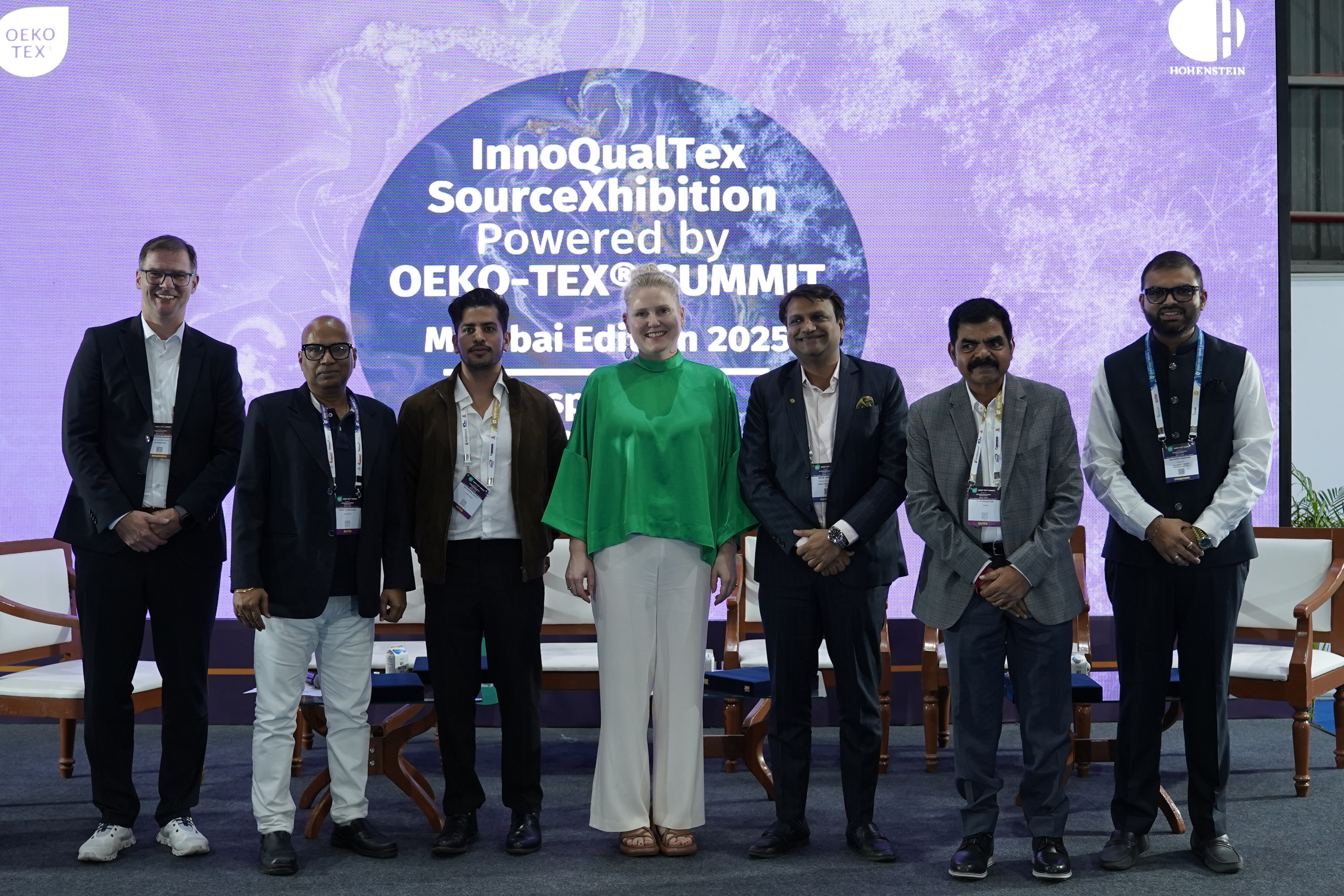
Panelists discussed what circularity means for their organizations and how it shapes strategic decisions in sourcing, production, and compliance.
Barriers and legislation
The session addressed major hurdles to implementing circular practices, including the impact of upcoming EU Sustainable Textile Legislation and the need for greater traceability through Digital Product Passports (DPP). Legislation can also create opportunities (not only for the sustainability frontrunners) especially when it harmonizes brands and standards requirements.
Innovation in recycling and materials
Companies like Alliance Fibres and Ginni Spectra highlighted developments in recycled polyester and non-woven specialty yarns, focusing on quality, scalability, and design for end-of-life recycling. SNQS works with brands on their circularity ambitions from raw material to end products and collaborated with reversed resources. They work like many Indian suppliers with tools and standards like Higg, ZDHC and OEKO-TEX to measure where they are and address hotspots and to work towards positive impact and integrate water- and chemical recycling systems.
Retail and consumer influence
Walmart’s sourcing policies and supplier engagement strategies were showcased as examples of how global retailers work on sustainability and circularity with well-organized sourcing operations, and partnerships, while the role of brands and consumers in accelerating adoption was emphasized.
Collaboration and certification
OEKO-TEX and Cradle to Cradle Certified discussed evolving certification systems and the partnership between the organisations to support verified toxic-free, circular collections.
Call to action
Each panelist offered recommendations for industry stakeholders to accelerate the transition to circularity, from taking the opportunity to show achievements that meet legal requirements, to harmonizing standards and audits, to collaborative innovation with the complete value chain including suppliers, brands, collectors, sorters and recyclers.
This session provided actionable insights and highlighted the collective effort needed to transform the circular value chain in the apparel and textile industry for a sustainable future.