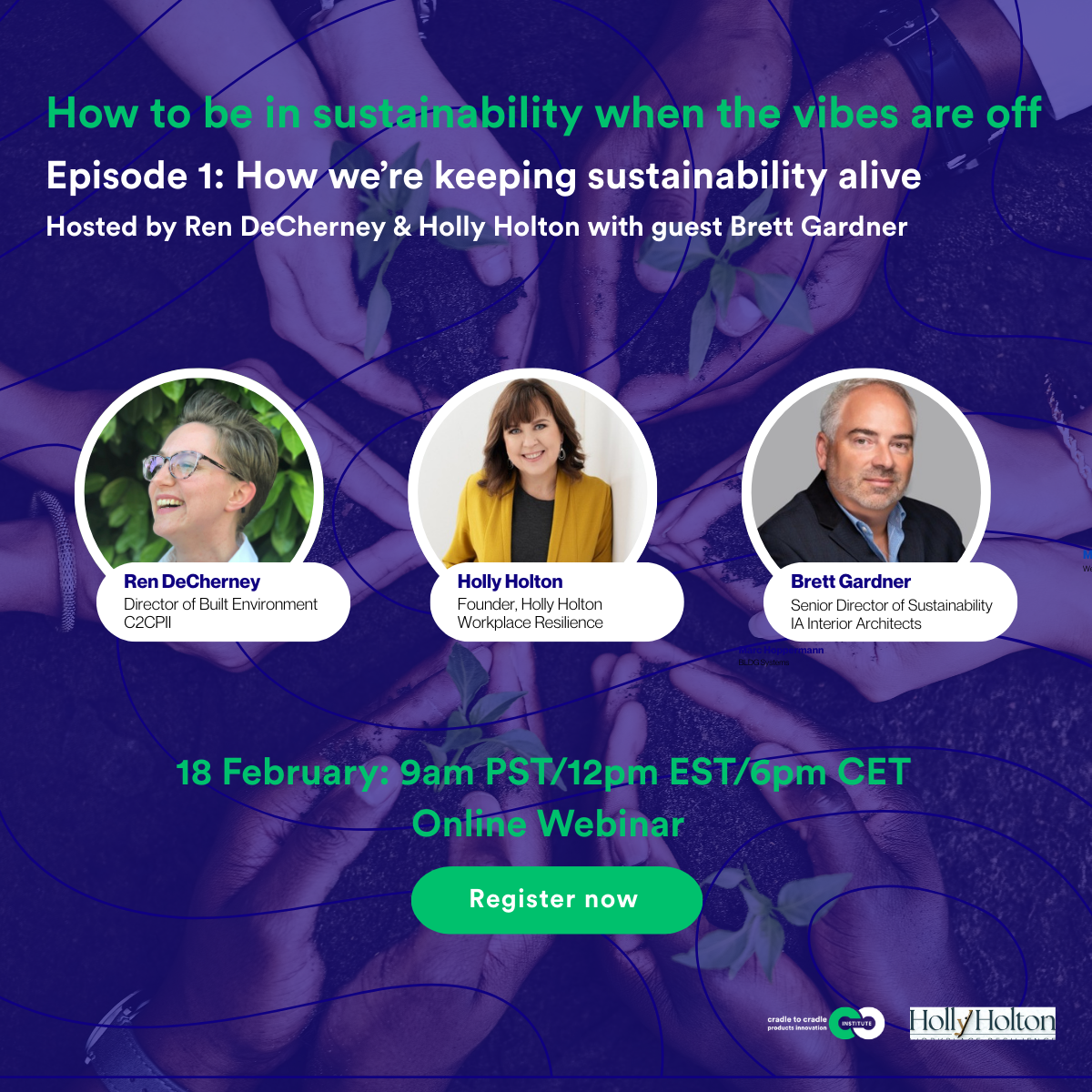
Ep.1: How we’re keeping sustainability alive from "How to be in sustainability when the vibes are off"
Key Takeaways
The good news: Business Is Still Driving Sustainability
While the atmosphere in the U.S. feels uncertain and unstable, global business momentum tells a different story.
Brett pointed to the 24% increase in companies setting science-based targets in the past year as a good indication of how the market is actually thinking about sustainability. In late 2024, roughly 5,200 companies had validated targets through the Science Based Targets initiative (SBTi). By the end of 2025, that number had climbed to over 9,300. So while headlines might be telling us sustainability is dead, a growing number of companies are taking a science-based approach to tackling their sustainability goals.
Setting a science-based target requires:
A full carbon footprint inventory
A materiality assessment
A decarbonization roadmap
Public accountability
Ren underscored the significance: this isn’t just companies making statements, they’re making actionable plans and executing. Even if regulations shift, market forces and global commitments are keeping sustainability firmly embedded in business strategy.
How to handle sustainability in a tough market: pivot, don’t quit
As the conversation moved to the realities of working in sustainability in the USA in particular, Brett offered insights from a recent project IA completed for a major corporate client that ended up winning a Planet Positive Award from Metropolis Magazine in 2024.
Originally targeting LEED certification, the team ran into a major obstacle: a 1970s building envelope that simply couldn’t meet the modern energy and carbon reduction targets the client wanted. Building upgrades weren’t feasible and budgets were tight directly post-COVID.
Instead of abandoning the ambition, Brett’s team pivoted.
They focused on circularity as a pathway to reduce embodied carbon. The pivot worked, and by focusing on circularity the team was able to turn the client’s goal into tangible and measurable results, including:
565,000 sq ft of carpet reclaimed by manufacturers
380,000 sq ft of ceiling tile reused
10,000 linear feet of interior partitions retained
2,300 workstations recreated using hybrid existing/new components
Nearly 200 tons of furniture diverted from landfill
When they calculated the carbon impact of circularity the result was substantial: 3,333 metric tons of CO₂e avoided.
To make that meaningful, they used the EPA’s greenhouse gas equivalency calculator to translate the impact into stats that resonate with everyone: the carbon savings were equivalent to removing 793 gas-powered vehicles from the road for a year.
Even more impressively, the project achieved an estimated 49–73% embodied carbon reduction compared to a typical tenant improvement build-out.
No formal certification framework required.
Ren and Holly emphasized that in their experience, this is the key to getting sustainability goals across the finish line: a project doesn’t have to fit the original sustainability pathway to succeed. In this uncertain market, staying agile and finding creative ways to turn sustainability goals into tangible results and benefits is what will keep designers and companies ahead.
For Smaller Firms: Start Where You Sit
Holly brought the conversation back to resilience: what can designers do if they don’t work at a big firm with Fortune 500 clients?
Brett had practical advice for designers who want to make an impact no matter what the size of their firm:
Improve your materials library
Choose ENERGY STAR appliances
Ask your reps about sustainability
Verify claims to avoid greenwashing
Most powerfully, he encouraged designers to “Let go of inaction.”
Ren echoed this with her own experience taking her firm PVC-free simply because she became passionate about material health. No mandate. No corporate directive. Just a desire to make an impact from where she stood.
Her message: Pick something you care about deeply because you’ll want to do it every day. That’s where your influence starts and then you can scale that impact.
Holly echoed this from a communications perspective. Sustainability isn’t just technical: it’s narrative. The ability to translate complexity into clarity is a professional superpower, and designers who can do this well will succeed no matter how the market fluctuates. Translating sustainability goals into tangible benefits keeps clients and stakeholders engaged. This is what being a leader in sustainability is all about.
Sustainability as your career superpower
When asked if sustainability had been a good pathway to future-proof their careers, the answer from Ren, Holly, and Brett was unequivocally yes.
That’s because incorporating sustainability into any project or company requires:
Systems thinking
Risk assessment
Financial literacy
Regulatory awareness
Cross-disciplinary collaboration
Holly echoed this from a communications perspective. Sustainability isn’t just technical: it’s narrative. The ability to translate complexity into clarity is a professional superpower, and designers who can do this well will succeed no matter how the market fluctuates. Translating sustainability goals into tangible benefits keeps clients and stakeholders engaged. This is what being a leader in sustainability is all about.
Brett highlighted Scope 3 specifically: purchased goods, business travel, employee commutes. These are rapidly becoming priority areas for corporations. That means designers and manufacturers who align with clients’ Scope 3 reduction goals will win work.
Their advice was deceptively simple: If you can’t measure it, you can’t manage it. If you can’t translate it, you can’t sell it.
Brett’s use of equivalency metrics (vehicles off the road, acres of forest) makes sustainability data conversational. If the message works at a cocktail party, chances are food it works in the boardroom.
2026: what designers should double down on
Brett’s closing advice to designers navigating sustainability this year:
Let go of: Inaction.
Double down on: Your specification power.
Designers influence spend. Spend influences supply chains. Supply chains influence emissions.
And most importantly, sustainability leadership doesn’t require permission. As Ren and Holly noted: sometimes you can “just do it quietly from your desk.”
Yes, the vibes are off, but the work is still alive. Even better, the opportunity is there for designers to use this moment to upskill and turn sustainability action and accountability into their superpower.
And if you need some inspiration:
Brett’s pump-up jam: Bohemian Rhapsody
Brett’s go-to song to spark creativity: Time to Say Goodbye by Andrea Bocelli and Sarah Brightman