Greenspeed: Designing the Future of Cleaning
From probiotics to recycled materials, Greenspeed is pushing the boundaries of what responsible, high-performing cleaning can look like.

Greenspeed was founded on a simple but ambitious idea: that professional cleaning can be both highly effective and genuinely responsible. In an industry often reliant on resource-intensive products and processes, the team reimagined what cleaning could look like and designed solutions that reduce impact while maintaining performance. From the start, this thinking has guided Greenspeed’s approach: prioritizing material health, circular design, and products built to last.
Cleaning the world with care, together
Greenspeed was founded on a simple but ambitious idea: that professional cleaning can be both highly effective and genuinely responsible. Based in Antwerp and active globally, Greenspeed develops cleaning detergents, microfiber products, and equipment for professional building maintenance, kitchen hygiene, personal care, and textile care.
Every product Greenspeed develops is guided by three core principles: circular, healthy, and effective. This approach closely aligns with the Cradle to Cradle philosophy, shaping not only how products are designed, but also how materials, packaging, and systems are continuously improved.
Today, Greenspeed’s Cradle to Cradle Certified® products range from professional cleaning solutions and probiotic cleaners to laundry products and reusable microfiber textiles, all assessed by EPEA, one of the Conformity Assessment Bodies of Cradle to Cradle Products Innovation Institute.

Redefining professional cleaning
For Greenspeed, circularity is a core business principle that guides how products are designed, made, and used. The company works within biological and technical cycles by selecting renewable or recycled raw materials that are biodegradable or recyclable wherever possible. Production is kept local when feasible, powered by green energy, and carried out with careful consideration for biodiversity and resource efficiency.
This circular approach is particularly evident in Greenspeed’s innovative Probio range. These products use probiotics which are beneficial bacteria that continue cleaning long after application. As Lies Marijnissen, Sustainability Manager at Greenspeed, explains, "Good bacteria keep working after cleaning, penetrating deep into surfaces to remove stubborn dirt and odors.” This reduces the need for harsh chemicals and helps minimize air, water, and soil pollution, while still delivering deep, long‑lasting cleaning performance.
Packaging design follows the same logic. By optimizing packaging for minimal weight per dose and prioritizing recycled and recyclable materials, Greenspeed reduces material use and transport impact without compromising effectiveness.
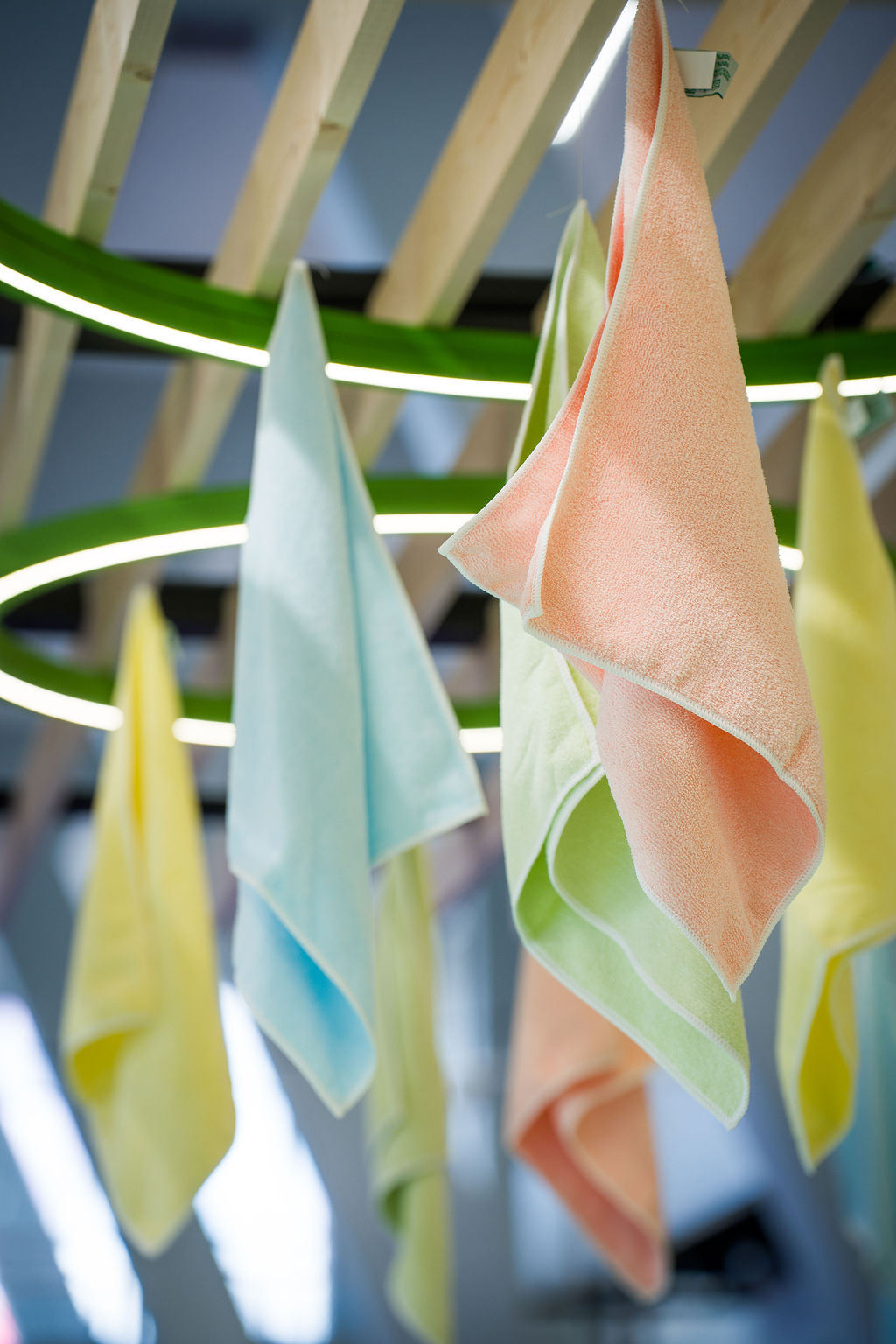
A clear example of circular innovation is the Greenspeed Re‑belle microfiber cloth. Made from 100% recycled PET and fully recyclable thanks to its mono‑material design, Re‑belle shows how circular thinking extends beyond cleaning agents alone. Greenspeed will launch a pilot collection system with a recycling partner to support the return and recycling of used cloths, closing the loop in practice, not just in theory.
Beyond its circular material design, Re‑belle also delivers high cleaning power, excellent absorption capacity, and a long service life, all while requiring minimal water use, proving that circular design and high performance can go hand in hand.
Underpinning both Greenspeed’s probiotic innovations and its circular microfiber solutions is a strong focus on material health, particularly when working with biological performance. As Mélanie Hurkmans, Senior Environmental Specialist at Greenspeed, explains:
“Greenspeed advances safe and beneficial material health innovation, from improving microfiber cycling to using microorganisms in effective, biosphere‑friendly cleaning solutions. While microorganisms can play a powerful positive role, they are not inherently safe. To address this, EPEA pioneered a dedicated assessment method for microorganisms within the Cradle to Cradle Certified® standard. This enables product developers to harness biological performance confidently and responsibly.”
Together, these approaches illustrate how Greenspeed translates circular design principles into practical, high‑performing cleaning solutions without compromising material safety or environmental integrity.
A Structured approach to continuous improvement
Sustainability has been part of Greenspeed’s DNA for more than 25 years. The company earned its first EU Ecolabel in 2008, followed by its first Cradle to Cradle Certified® and Nordic Swan certifications in 2012. These milestones helped shape a mission that continues to guide the company today: cleaning the world with care, together.
Cradle to Cradle Certified® plays a central role in that journey. Rather than acting as a one-time validation, the framework informs product development across every stage, encouraging teams to consistently evaluate material health, circularity, and performance.
As Greenspeed’s Sustainability Manager explains, the value of certification lies in its ability to push innovation forward while maintaining credibility. The assessment process requires verifiable data, transparency, and long-term thinking, helping Greenspeed differentiate in a competitive market while continuing to improve at scale.
Zero waste is a key part of that vision. New solutions, such as Probio Tabs, are designed to make waste-free cleaning more accessible, translating circular design principles into practical, everyday use.
-1781184033.jpg)
Designing the future we need
Greenspeed sees the future of cleaning as moving beyond hygiene toward care, but also cares for the planet, society, and future generations. As a certified B Corp, the company is committed to balancing profit with purpose and meeting high standards of social and environmental responsibility. This vision is reflected in Greenspeed’s continued investments to invest in product innovation, recyclable materials, and reduced water and energy use, while exploring scalable circular business models.
As sustainability becomes the norm rather than the exception, the cleaning sector faces growing expectations. Clients and stakeholders increasingly demand reduced chemical use, less single‑use plastic, and more efficient use of resources. At the same time, evolving European regulations (including the EU Green Deal) require continuous adaptation and innovation.
For Greenspeed, these pressures reinforce the importance of designing products that are not only compliant, but restorative by intent, balancing environmental impact with performance and long‑term value.
Guidance for your Cradle to Cradle Certified® journey
Embracing Cradle to Cradle Certified® began with a mindset shift at Greenspeed. The goal is not to make products “less bad,” but to design them to be circular and regenerative from the outset.
According to the team, collecting detailed data on materials, sourcing, and environmental impact can feel overwhelming at first, but it quickly becomes a powerful tool for insight and progress. As Lies puts it,
“the certification process is not a checkbox exercise, but a learning journey that stimulates innovation and challenges companies to continuously improve.”
Their advice to companies just getting started is simple: start with the right mindset, not just better materials. Stay curious and approach the framework as an opportunity to grow - not merely to comply.

A thoughtful approach to cleaning
At Greenspeed, circularity shapes how cleaning is imagined, produced, and delivered. Through thoughtful material choices, innovative formulations, and a commitment to transparency, the company demonstrates that professional cleaning can be effective, healthy, and designed for the future.
Cradle to Cradle Certified® provides the structure, but it is care, embedded into every decision, that drives lasting impact.