Shaping the future of sustainable products: ESPR, DPPs & the power of validated data
Regulations are changing what product data means. Our latest blog post breaks down what ESPR and Digital Product Passports mean for companies, and where Cradle to Cradle Certified® fits in.

Europe is entering a decisive decade for sustainable products. The Ecodesign for Sustainable Products Regulation (ESPR) is now in force, Digital Product Passports (DPPs) are on the way, and the direction of travel is clear: sustainability data is moving from voluntary to mandatory, and from fragmented to structured.
The ESPR applies to nearly all physical goods sold in the EU (excluding food, animal feed, and medicines) and sets new requirements for durability, circularity, material transparency, and supply chain traceability, rolled out through product-specific delegated acts. Its goal is straightforward: make sustainable products the norm rather than the exception.
At the centre of this shift is the Digital Product Passport. A structured, machine-readable dataset that travels with a product across its lifecycle, the DPP will carry information on materials, environmental impact, repairability, and end-of-life pathways, enabling compliance, circular business models, and trust across value chains.
The challenge most companies face is not a lack of data. It is a lack of data that is reliable, verifiable, and comparable enough to meet what regulators and markets will expect.
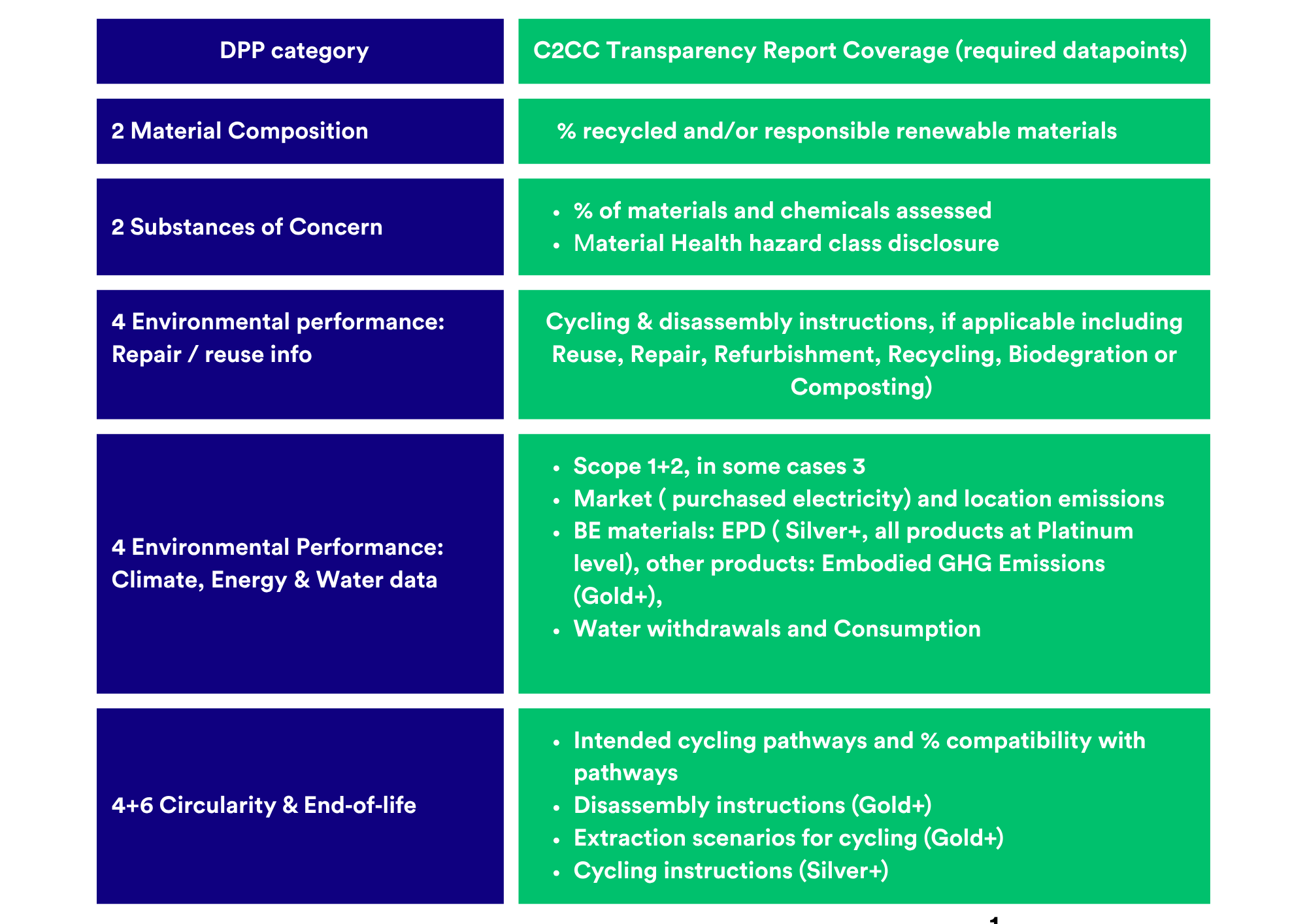
This is where Cradle to Cradle Certified® becomes relevant. The standard already requires companies to generate and verify exactly the kind of data that DPPs will demand, from material health and chemical safety to circularity and environmental performance, all assessed by independent third parties. It is one of the few frameworks aligned with the depth and verification level that ESPR anticipates.
The Cradle to Cradle Certified® Product Data Report translates this verified data into a structured, digital-ready format, supporting:
A validated data foundation
Faster DPP implementation
Greater circular value chain transparency
Stronger credibility with customers, regulators, and market authorities, including direct exchange of validated data with retailer platforms or material banks
The shift has started. The question is no longer whether companies need to build a data foundation, but how quickly they can do it.
Companies that act early will reduce compliance risk, unlock circular opportunities, and strengthen their competitive position in the EU market. Cradle to Cradle Certified® offers a proven starting point.